As an Amazon Associate this site earns from qualifying purchases.
Quick Picks
| Product | Stated specification | Best for | Link |
|---|---|---|---|
| StowAway Max Hitch Cargo Box with Swingaway Frame | Black | 16 cubic feet of enclosed cargo space and a 200 lb load rating | Moving gear off the roof entirely after a roof box fails | Check Price on Amazon |
| StowAway Max Hitch Cargo Box with Swingaway Frame | Ivory | Same 16 cubic feet and 200 lb rating, listed with reflectors | The same hitch box in a lighter finish | Check Price on Amazon |
| Pelican Cargo Case BX135 (Black) | Weather resistant and dustproof, 41.00" x 17.25" x 16.00" exterior | A hard case for a truck bed, or for storage in an SUV | Check Price on Amazon |
Disclosure: We earn a small commission from qualifying Amazon purchases at no extra cost to you.
As an Amazon Associate we earn from qualifying purchases. This page contains affiliate links, and we may receive a commission if you buy through them — at no extra cost to you.
As an Amazon Associate, we earn from qualifying purchases.
Last Updated: September 2026
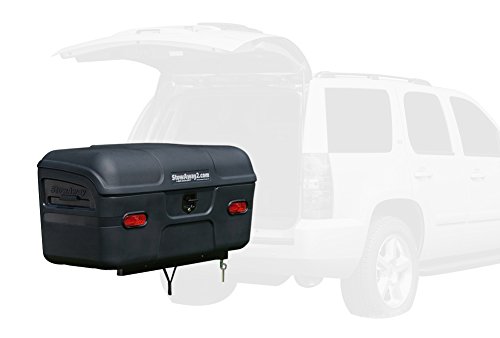
- MAXIMUM STORAGE & CAPACITY – 16 cubic feet of enclosed cargo space and a 200 lb load rating provide plenty of room for luggage, camping gear, tools, and more while keeping your
- FULL REAR ACCESS WITH SWINGAWAY FRAME – The StowAway Swingaway frame pivots the box away from the vehicle, giving unobstructed access to your rear doors, hatch, or tailgate
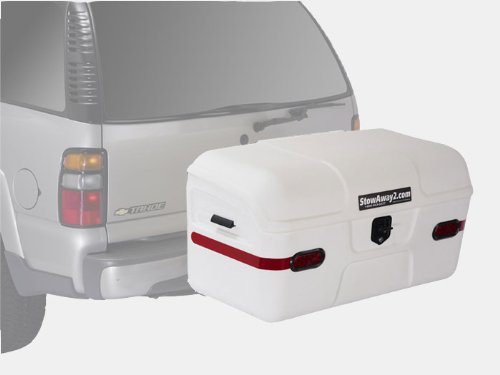
- MAXIMUM STORAGE & CAPACITY – 16 cubic feet of enclosed cargo space and a 200 lb load rating provide plenty of room for luggage, camping gear, or tools while keeping your vehicle
- FULL REAR ACCESS WITH SWINGAWAY FRAME – The StowAway Swingaway frame pivots completely to the side, giving unobstructed access to your rear doors, hatch, or tailgate without
The Short Answer
Water inside a cargo box can have several causes, including wet contents, condensation, damaged components or the limits of the box’s weather protection. First check the manufacturer’s instructions and protection claims for your exact model. Not every box uses a lid gasket, and weather resistance does not establish a waterproof enclosure. Do not assume a universal cause or repair method from where the water appears.
Here is the thing most people get wrong: they reach for silicone sealant first. Sealant is the last step, not the first. Until you know where the water enters, you are just gluing a lid shut.
Why Cargo Boxes Leak
1. Gasket compression set
If your model has a replaceable gasket, inspect it for dirt, displacement or visible damage using the manufacturer’s procedure. A visual check alone does not establish its sealing performance. Confirm the correct replacement part and whether the manufacturer permits owner replacement; some lid designs do not use the gasket arrangement described here.
2. Uneven latch tension
Inspect the closing and locking mechanism according to the box manual. Remove any cargo obstructing closure, and stop using a box with a damaged or malfunctioning latch. Do not force the lid or assume that every latch can be tension-adjusted; have the manufacturer or an authorized service provider assess it when the instructions do not specify an owner adjustment.
3. Fastener and mount penetrations
Inspect mounting areas for visible damage, displaced parts or evidence of water entry. Mounting designs differ, so do not assume every fastener uses a sealing washer or can be removed for resealing. Follow the specified hardware and tightening procedure; do not drill new holes, add sealant or change mounting components without manufacturer approval.
4. Condensation that is not a leak
Damp gear and temperature changes can contribute to condensation. Note when the moisture appears and whether the contents were already wet, but do not treat an even moisture pattern or the absence of a dirt trail as a conclusive diagnosis. Dry the box and contents according to the care instructions and seek manufacturer guidance if the cause remains unclear.
Step-by-Step: Find the Leak Before You Fix It
- Read the care and troubleshooting instructions for the exact box. Check the stated weather protection and any approved inspection or water-test method.
- Empty the box and inspect it while safely parked. Note visible cracks, damaged closures, displaced seals where fitted, and wet contents. Do not use a damaged mounting or locking system.
- Dry the box as instructed and record where moisture returns. If the manufacturer permits a water test, follow its method; do not improvise high-pressure spraying or a fixed test duration.
- Check closure using the manufacturer’s procedure. Do not insert material into the seal, force the lid or adjust latch tension unless the instructions authorize that procedure.
- Inspect accessible mounting areas without loosening them. Record visible staining or damage for the manufacturer rather than assuming which component needs sealant.
- Treat a dry stationary check as inconclusive. It may not reproduce road exposure or condensation and does not prove that the box is ready for travel.
How to Fix Each Leak Type
- Use approved cleaning products. Follow the care instructions for the shell and any seals. Do not assume silicone grease, dielectric grease or a general-purpose cleaner is compatible with every material.
- Use the correct service parts. Ask the manufacturer about the exact gasket or closure component, where fitted. Do not substitute generic weatherstrip, add shims or invent a joint location.
- Service latches only as instructed. A damaged or unreliable closure requires repair before travel; stop if the manual does not provide an owner-service procedure.
- Preserve the specified mounting system. Use approved hardware and the manufacturer’s tightening or torque instructions. A generic instruction to tighten by hand or apply marine sealant is not a substitute.
- Dry and ventilate only while stationary. Follow the storage and drying instructions. Never drive with the box open, partly latched or unlocked to manage condensation.
- Protect moisture-sensitive contents separately. Use suitable inner storage according to its own instructions; this does not repair a damaged carrier or establish waterproof performance for the box.
Recommended Products
Straight talk: none of the three cases below is a lid-gasket repair kit. They matter for the other half of this problem — when a roof box is past economical repair, or when you want a hard case listed as weather resistant and dustproof for the gear you most want to keep dry. All three are sold as their own carriers, and the sections below stick to what each listing actually publishes.
StowAway Max Hitch Cargo Box with Swingaway Frame | Black — Best for moving gear off the roof entirely
This one earns the pick for buyers abandoning a leaky roof box, because the listing states 16 cubic feet of enclosed cargo space and a 200 lb load rating, mounted at the hitch rather than overhead. The listing does not state a waterproof or ingress rating, and it publishes nothing about airflow or water intrusion performance, so a hitch position should not be assumed to seal better than a roof lid.
The listing describes construction molded from the same impact-resistant polymer used in whitewater kayaks, and calls the result weather-resistant. It also lists a keyed locking latch, hitch tightener, lit license plate bracket, and LED taillights, plus a Swingaway frame that pivots the box away from the vehicle for rear-door access.
Consider carefully: the record describes weather resistance in general terms and does not publish a gasket specification or seal type, so treat it as a covered carrier rather than a certified dry box.
StowAway Max Hitch Cargo Box with Swingaway Frame | Ivory — Best for the same hitch capacity in a lighter finish
Same headline numbers: this listing also states 16 cubic feet of enclosed cargo space and a 200 lb load rating. The hardware wording differs between the two records: this ivory listing specifies a keyed locking latch, hitch tightener, reflectors, and LED taillights. The StowAway Max Hitch Cargo Box with Swingaway Frame | Black listing specifies a keyed locking latch, hitch tightener, lit license plate bracket, and LED taillights. Neither record states whether the other box has the hardware its own bullet omits.
Its frame is described as pivoting completely to the side for unobstructed rear access, and the listing states it is assembled in the Pacific Northwest using American-made components.
Consider carefully: if a lit plate bracket matters for your plate location, ask the seller before choosing colour, because the ivory record does not publish that detail either way.
Pelican Cargo Case BX135 (Black) — Best for a hard case in a truck bed
The reason to look here is the sealing language: this listing describes the case as weather resistant and dustproof, with a limited lifetime guarantee covering the case only. That adds an explicit dustproof claim, but it does not establish better water protection than another carrier. Weather resistance is not a submersion rating, and the supplied listing does not publish an IP rating.
Published dimensions are 41.00" x 17.25" x 16.00" exterior and 36.80" x 12.25" x 13.20" interior, at 28.70 lbs empty. Subtract those and the Pelican Cargo Case BX135 (Black) loses 4.20" of length, 5.00" of width and 2.80" of depth to wall and lid structure — useful to know before you assume a long item will fit. The listing also names heavy duty lay-flat handles, tie-down plates and a mounting kit interface plate, and states it is designed to mount in a truck bed using the Pelican Cargo Cross-Bed Mount, sold separately.
Consider carefully: the only mounting system named for the Pelican Cargo Case BX135 (Black) is the truck-bed Pelican Cargo Cross-Bed Mount, which is a separate purchase; the listing publishes no roof-mounting kit or roof load rating, so do not treat the tie-down plates as a roof-carriage solution. The guarantee is stated for the case only.
Tips for Best Results
- Follow the manufacturer’s storage instructions for the box and closure; do not assume that leaving every model unlatched preserves its seals.
- Dry the box in the position specified by its care instructions. Parking on a slope does not establish that a closed box will drain, and is not a leak repair.
- After approved service, complete the manufacturer’s closure and mounting checks before use and at the intervals its instructions specify.
- Test after every fix. Fixing three things at once teaches you nothing about which one worked.
Common Mistakes to Avoid
- Running a bead of silicone around the gasket. It bonds the lid shut, tears on opening, and leaves residue that prevents the next seal from seating.
- Over-tightening latches to "crush" a leak closed. That accelerates compression set and can distort the lid.
- Assuming a wet interior means a failed seal. Condensation and wet gear account for a lot of "leaks".
- Modifying the shell or mounting system without approval. Do not drill holes or substitute hardware as a leak repair; consult the manufacturer about a supported service method.
- Testing with the box on the car in the rain. You learn that it leaks, not where.
How We Research
This website does not do product research. For this page, we read each product's Amazon Creators API verified product record and its published listing feature bullets, retrieved 6 September 2026, and compared the two StowAway variants field by field to see where the records genuinely differ rather than assuming the colours are identical. Where a listing does not publish a figure — an ingress rating, a gasket profile, a seal warranty — we say so rather than filling the gap.
Final Verdict
Start by establishing whether the moisture is expected under the box’s stated protection level or comes from damage or a serviceable fault. Obtain the manufacturer’s repair guidance and compare the actual repair and replacement options. These supplied records do not establish how often a particular repair succeeds or what it costs.
If the shell itself is cracked or the lid is distorted, the honest question is whether you want to stay on the roof at all. The StowAway Max Hitch Cargo Box with Swingaway Frame moves the load off the roof: its listing states 16 cubic feet of enclosed cargo space and a 200 lb load rating, carried at the hitch behind the vehicle. Its record publishes no sealing, ingress or water-intrusion data, so a hitch position should not be assumed to cure roof-lid leaks. If you want a weather-resistant, dustproof home for tools and electronics in a truck bed or stored in an SUV, the Pelican Cargo Case BX135 (Black) is the one whose listing actually uses the words weather resistant and dustproof.
Related Resources
- Roof box installation guide
- Hitch cargo carriers vs roof boxes
- Reducing roof box wind noise
- Product safety recalls and consumer guidance: CPSC and USA.gov consumer protection
Sources & Methodology
Nobody at this website physically or laboratory-tested any carrier on this page, and we run no lab. What we did do is read the Amazon Creators API verified product records and the published listing feature bullets for all three cases on 6 September 2026, then reason from the exact wording — treating "weather-resistant construction" and "weather resistant and dustproof" as the different claims they are, and noting where the black and ivory StowAway records word their hardware bullets differently. For a leak-driven purchase that is genuinely useful: it tells you what each manufacturer is willing to state about capacity, construction, dimensions and sealing, which is the right basis for a shortlist, but it cannot tell you how any of them behave in sustained highway rain, because no listed source publishes that.